In September 2026, the project launch meeting of the "Southeast University–Nantong Institute of Technology Joint R&D Center for Low-Altitude Industry Innovation Technologies in Complex Coastal Environments" was held at the School of Transportation, Southeast University. Leaders in attendance included Zhong Wenqi, Party Committee Standing Committee member and Vice President of Southeast University; Cheng Chun, President of Nantong Institute of Technology; Zhang Guangming, Vice President of Nantong Institute of Technology; and Wu Weidong, Deputy Director of the Nantong Municipal Science and Technology Bureau.The two universities have joined forces to tackle low-altitude technology challenges in complex coastal environments characterized by strong winds, high salinity, and high humidity, jointly serving the national strategy for the low-altitude economy.
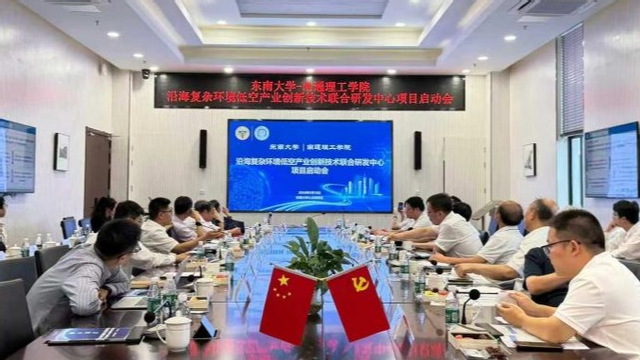
The launch meeting was chaired by Ma Tao, Dean of the School of Transportation at Southeast University. At the meeting, leaders from both universities jointly unveiled the plaque of the Joint R&D Center and presented appointment letters to experts of the Academic Committee. The two sides delivered reports and held discussions on the Center's charter, research development plans, and technology R&D directions. Tang Xinming, Chief Professor of Southeast University and Chair of the Center's Academic Committee, presided over the special session on development strategies.

Deep Integration, Building a High Ground for Coastal Low-Altitude Technology Innovation
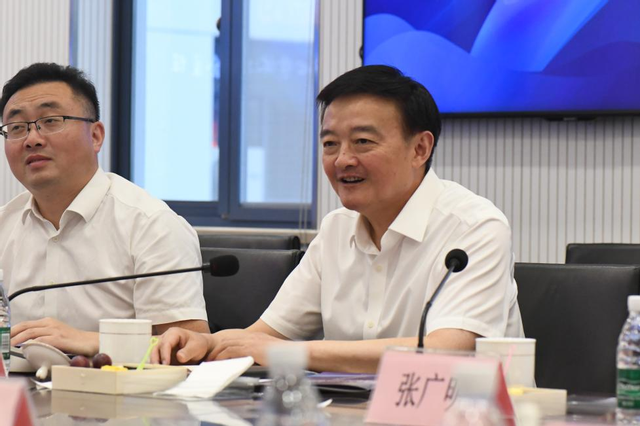
The special conditions of strong winds, high salinity, and high humidity along the coast of Jiangsu Province make it a natural testing ground for low-altitude technologies while also imposing higher requirements on equipment and operational support. Nantong Institute of Technology has distinctive strengths in engineering applications, industry-education integration, and scenario-based validation. The joint establishment of the R&D Center by the two universities is a strategic decision that combines their strengths and complements each other's advantages — it serves both as a platform for scientific research collaboration between the two universities and as a pilot field for coordinated innovation among universities, local governments, and enterprises. The Center will implement the "one institute, ten enterprises" industry-academia-research model, engage with enterprises across the industrial chain, and promote the local application and commercialization of research achievements along the coast of Jiangsu.Vice President Zhong Wenqi proposed that the Center's development should focus on key research directions such as the weather resistance of low-altitude equipment, airspace safety along coastal areas, and integrated sea-air inspection; deepen industry-academia-research integration through the "one institute, ten enterprises" mechanism, actively pursue major projects, and smooth the channels for translating research achievements into applications; and advance the joint training of graduate students and two-way exchanges of young core faculty, so as to build an innovative talent pipeline in the low-altitude field.
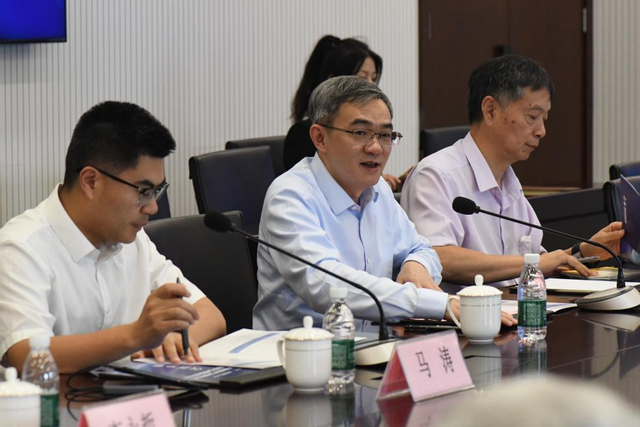
President Cheng Chun stated that this in-depth cooperation is an important opportunity for the university to renew its educational philosophy and enhance its scientific research service capabilities. He emphasized that the university should stay closely aligned with regional development strategies, serve local industries, and help enterprises solve technical problems; deepen university-to-university collaboration with the Center serving as a bridge, and expand cooperation with various platforms of Southeast University's Nantong campus; fully leverage the role of the expert think tank, broaden external exchanges, and produce practical and effective research achievements.
Looking to the Future: Contributing University Strength to the National Low-Altitude Economy
At the beginning of the 15th Five-Year Plan period, Southeast University is comprehensively building a new paradigm of disciplinary development featuring "first-class across all disciplines, top-tier engineering, interdisciplinary leadership, and emerging excellence," and is accelerating the deep cross-disciplinary integration of artificial intelligence, automatic control, electronic information, and disciplines such as architecture, transportation, and civil engineering.In the low-altitude economy — an important frontier of new quality productive forces — Southeast University boasts not only a solid disciplinary foundation but also concrete actions. The university has taken the initiative to establish a new undergraduate program in Low-Altitude Technology and Engineering this year, while simultaneously expanding international cooperative education programs; the School of Transportation has set up a Low-Altitude Department, focusing on complex coastal environments and delving into research on low-altitude operation management and the environmental adaptability of equipment; and Dean Ma Tao attended the plaque-awarding ceremony of Jiangsu's School of Low-Altitude Technology and Engineering on behalf of the university.Southeast University will join hands with Nantong Institute of Technology to build the Joint R&D Center into a model benchmark for inter-university collaboration, a high ground for innovation in coastal low-altitude technologies, and a cradle of talent for industry-education integration, thereby contributing university wisdom and strength to the high-quality development of Jiangsu's low-altitude economy and to accelerating the cultivation of new quality productive forces!Riding the wind and soaring into the sky, the transportation scholars are, with a more open attitude and more pragmatic actions, striving to take the lead in the vast arena of the low-altitude economy, empowering regional development through scientific and technological innovation, and writing a brand-new chapter in serving the national strategy.